Two jackets can share the same fabric and the same price and still live completely different lives. One goes out every weekend; the other hangs by the door. Usually the difference is in the details: a pocket you can reach with a bag strap on, a hood that turns with your head, a hem that does not ride up when you lean over a gate.
This guide looks at those details through the terrain that tests them. The photographs are annotated to show what to look at, not to vouch for any particular product or claim.
Pockets: where your hands actually go
Hand pockets at hip height are natural on a flat park walk, but a rucksack hip belt or cross-body bag blocks them. Higher "hand-warmer" pockets set above the belt line stay usable. A chest pocket is handy for a phone or folded map, especially if it opens vertically so things do not fall out when you bend.
Zipped pockets are slower but keep keys from escaping when you sit on a wall. Open patch pockets on chore coats and field jackets are quick and tough, and the classic large "poacher" or game pocket at the back of a country jacket swallows a hat, gloves and a dog lead in one go.
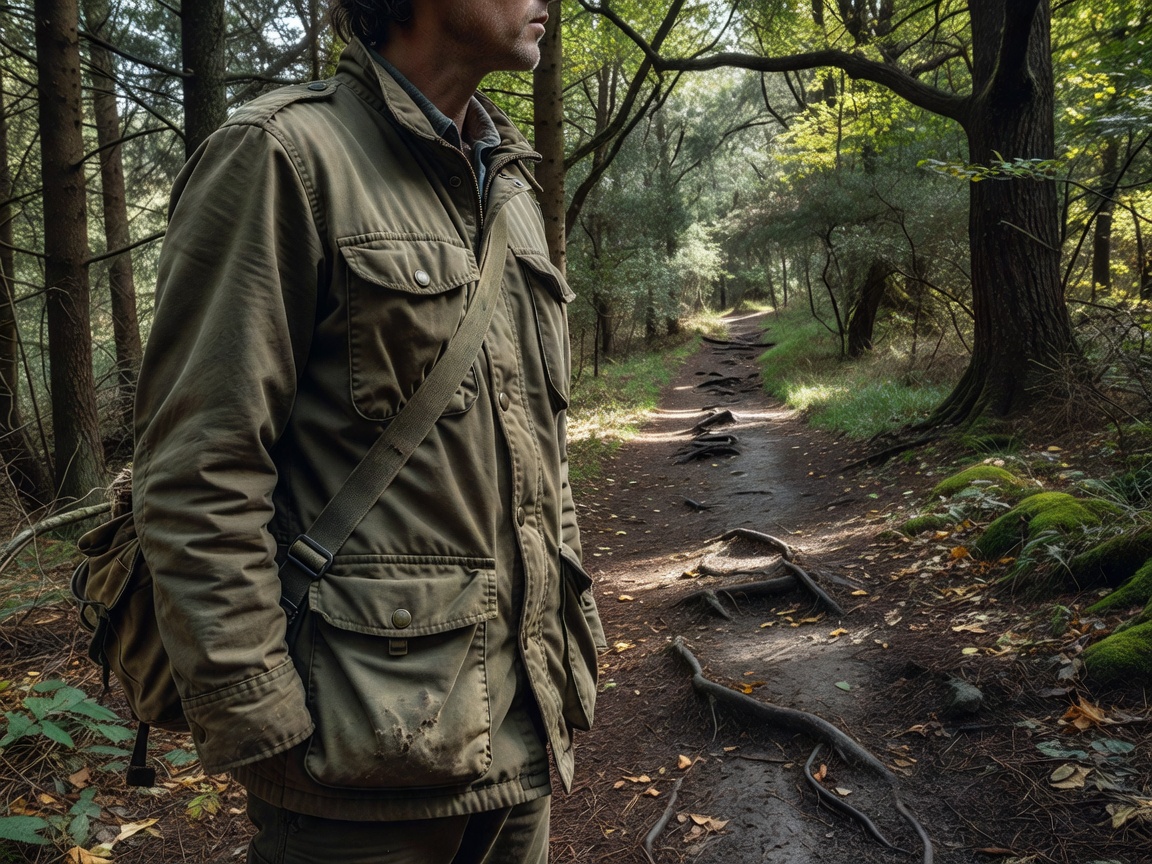
- Chest pocket sits above the shoulder strap line, so it stays reachable.
- Hip pockets are partly covered by the bag strap; fine for town, awkward on a longer route.
- Storm flap over the front zip helps on windy days but adds a little bulk.
- Collar stands up enough to cover the neck without a hood.
Hems and lengths: stiles, gates and long grass
A jacket that ends at the waist moves freely over stiles and stays out of mud, but leaves the seat exposed to wind and rain. A longer, thigh-length coat keeps you warmer on a cold stand-around and covers the top of trousers, though it catches on vegetation and gets heavy at the hem when wet. Many walking shells use a "drop-tail" hem, slightly longer at the back, which stays put when you lean forward on a climb.
For trousers, length matters more on wet verges than people expect. A hem that drags on the ground wicks water up the leg in dewy grass. A slightly cropped or cuffed leg stays drier and avoids snagging on bootlaces. Ankle cinches or a simple roll can do the same job on a pair you already own.
Knees and seats: moving over uneven ground
Stepping up onto rocks, hopping a stream or squatting to look at something on the path asks a lot of trouser cut. Articulated or pre-shaped knees and a gusseted crotch give more room without baggy fabric. Stretch blends help too, though they usually trade a little abrasion resistance. Classic straight-cut denim or heavy canvas can feel fine on the flat and restrictive on the first steep step.
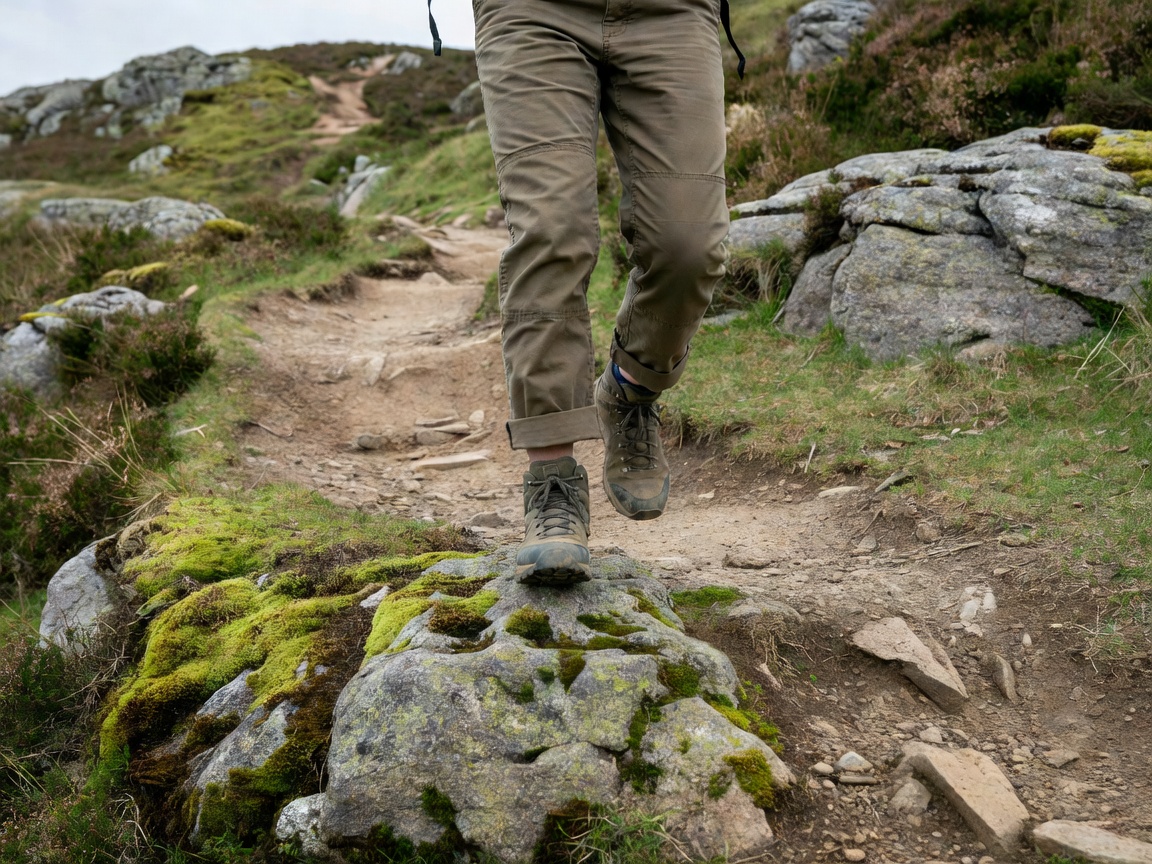
- Shaped knee panels let the leg bend without the fabric pulling at the thigh.
- Rolled hems keep the trousers clear of wet moss and bootlaces.
- Darker fabric at the seat and knees hides wear and mud between washes.
Cuffs, hoods and collars: the weather edges
Rain and wind usually get in at the edges. Adjustable tab cuffs on shells close against sideways rain and open on climbs. Knitted inner cuffs feel cosy but stay damp once wet. A hood with a stiffened peak and a rear adjuster turns with your head and keeps rain off your glasses; a loose hood without adjustment tends to blow back or block your side vision when you check for cyclists on a shared path.
A tall collar is underrated. On breezy days in places like the Yorkshire Dales or along coastal paths such as the Pembrokeshire Coast Path, a collar that zips up to the chin often replaces the need for a scarf or hood altogether.
Zips and closures
Two-way front zips let you open the bottom for leg room on climbs or when sitting. Pit zips vent heat but add seams. Snap buttons are easy with cold hands and quiet; zips seal better. Whatever the closure, check whether you can operate it with gloves on and one hand busy holding a lead or a child.
Reflective trim and colour
Many routes include a stretch of road or a lane without pavement. Small reflective details and lighter colours make you easier to see at dusk. This is a visibility consideration rather than a guarantee; on unlit roads, carrying a light and following the Highway Code advice for pedestrians matters far more than any garment trim.
Details do not need to be technical to be useful. The best feature is the one that matches a moment on your usual route that currently annoys you.
Pair these notes with the layering guide and the fabric comparisons.