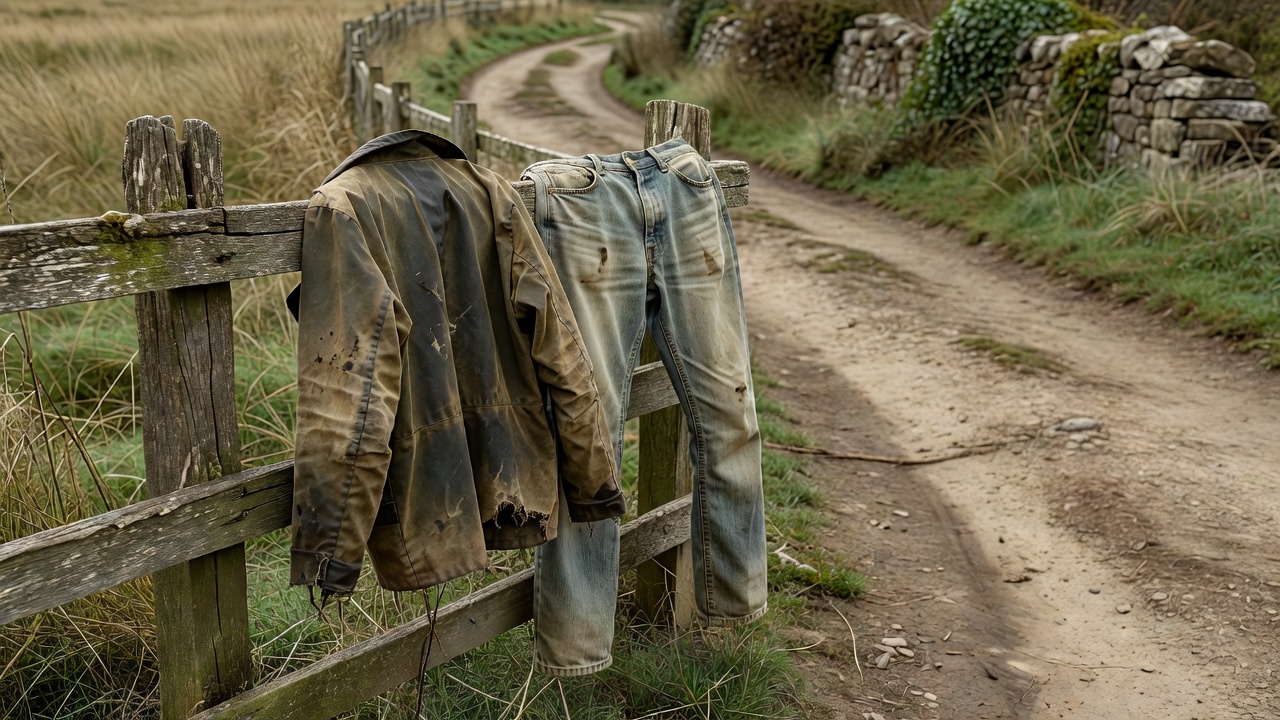
"Durable" is one of the most used and least useful words in clothing descriptions. A fabric can resist scuffing against rock and still tear easily on a barbed wire fence. It can shrug off rain and still soak through at the cuffs within an hour of bramble-bashing. It can survive years of wear and still feel miserable when wet. Toughness is not one quality; it is several, and every fabric trades some of them away.
This guide sorts common rugged-casual materials by what they actually do on ordinary routes. We do not score them or invent ratings. We describe the compromise, so you can choose the one that suits the ground you cover.
Four kinds of toughness
Abrasion resistance is how well a fabric copes with rubbing: rucksack straps on shoulders, sitting on stone walls, knees on gravel. Tear resistance is how it copes with snagging on thorns, fences and car doors. Weather resistance covers wind and water. Repeat-wear resilience is how it looks and behaves after a hundred wears and fifty washes, which is the measure that matters most for everyday clothes.
Outer fabrics side by side
| Fabric | Where it earns its place | What you give up |
|---|---|---|
| Waxed cotton | Hedgerows, farm tracks, drizzly country walks; ages with visible character | Heavy, slow to dry inside, can feel clammy on climbs, needs periodic re-waxing |
| Cotton canvas / duck | Dry rough work, scrambling over walls, brush; resists scuffs well | Absorbs rain, stiff at first, heavy when wet |
| Nylon ripstop | Light shells and trousers for longer walks; packs small | Can feel crinkly, shows wear at high-friction points, coatings may wear over time |
| Polyester softshell | Breezy dry days and stop-start walks; stretchy and quiet | Usually only shower-resistant, not built for sustained rain |
| Densely woven cotton (such as Ventile) | Windy open ground; quiet, breathable, very long-lived | Expensive, heavier than synthetics, stiffens when soaked |
| Denim | Town-to-trail days, dry paths, casual repeat wear | Cold and heavy when wet, slow to dry, restrictive on big steps unless cut with stretch |
Next to the skin and in the middle
| Material | Strength | Compromise |
|---|---|---|
| Merino wool | Comfortable across a range of temperatures, resists odour over several wears | Thin knits can wear through at elbows; higher cost; needs gentler washing |
| Synthetic jersey | Dries quickly, inexpensive, robust in the wash | Can hold odour; some people find it clammy |
| Polyester fleece | Warm for its weight, dries fast, easy to care for | Lets wind through, can pill, sheds microfibres in the wash |
| Lambswool or shetland jumper | Warm even when slightly damp, timeless look | Bulky to carry, snags on brambles |
| Cotton flannel | Soft, breathable on dry cool days | Absorbs moisture and stays cold once wet |
Coatings, membranes and what labels say
Many modern shells pair a face fabric with a waterproof membrane or coating and a durable water repellent finish on the outside. That finish is what makes rain bead up. It wears down with use and dirt, which is why a jacket can feel "less waterproof" over time even if the membrane underneath is fine; the face fabric is simply soaking up water and feeling cold.
Many manufacturers have moved away from older fluorinated repellent treatments. Newer finishes vary in how long they last between re-treatments. Rather than relying on marketing language, read what the maker actually claims and look for any standard they cite. We do not test garments or verify certifications, so treat our notes as background, not confirmation.
Weight is a trade-off too
Heavier fabrics usually last longer against abrasion, but they cost you in warmth on climbs, pack size and drying time. A 12-ounce canvas jacket is superb for clearing brush on a dry autumn day in the Cotswolds; it is a burden on a six-mile walk along the South Downs Way in a warm spell. Lighter fabrics move with you, dry fast and fold into a bag, but they show wear at shoulder straps and cuffs sooner.
Buying secondhand: reading the fabric
Rugged clothes are well suited to secondhand buying because their wear tells a story. Check the inside of waxed jackets for cracking; check shells for peeling tape along seams; check the seat and knees of trousers in good light. A faded, softened canvas jacket may have years left in it. A shell with delaminating inner coating usually does not, however good the outside looks.
No fabric is right for every route. Choose based on how often the conditions you meet are wet, windy, thorny or simply long.
See how fabric choices interact with pockets, hems and cuffs, or learn how to keep them going in our field care notes.