Rugged clothes have a reputation for being indestructible, and that reputation is often why they wear out early. A canvas jacket thrown damp into a cupboard, a shell washed with fabric softener, a small tear left to grow: these are the ordinary ways good clothes fail. Care does not need to be elaborate. It needs to happen soon after the walk and to follow the garment's own label.
First hour: let it breathe
When you get home, hang wet layers somewhere airy rather than leaving them balled up in a bag. Open zips and pockets so air reaches the inside. Hang shells and coats on a broad hanger so shoulders keep their shape. Stuff wet boots loosely with newspaper and leave them away from radiators; the same goes for jackets. Direct strong heat can damage coatings, shrink wool and stiffen waxed cotton unevenly.
Mud: wait, then brush
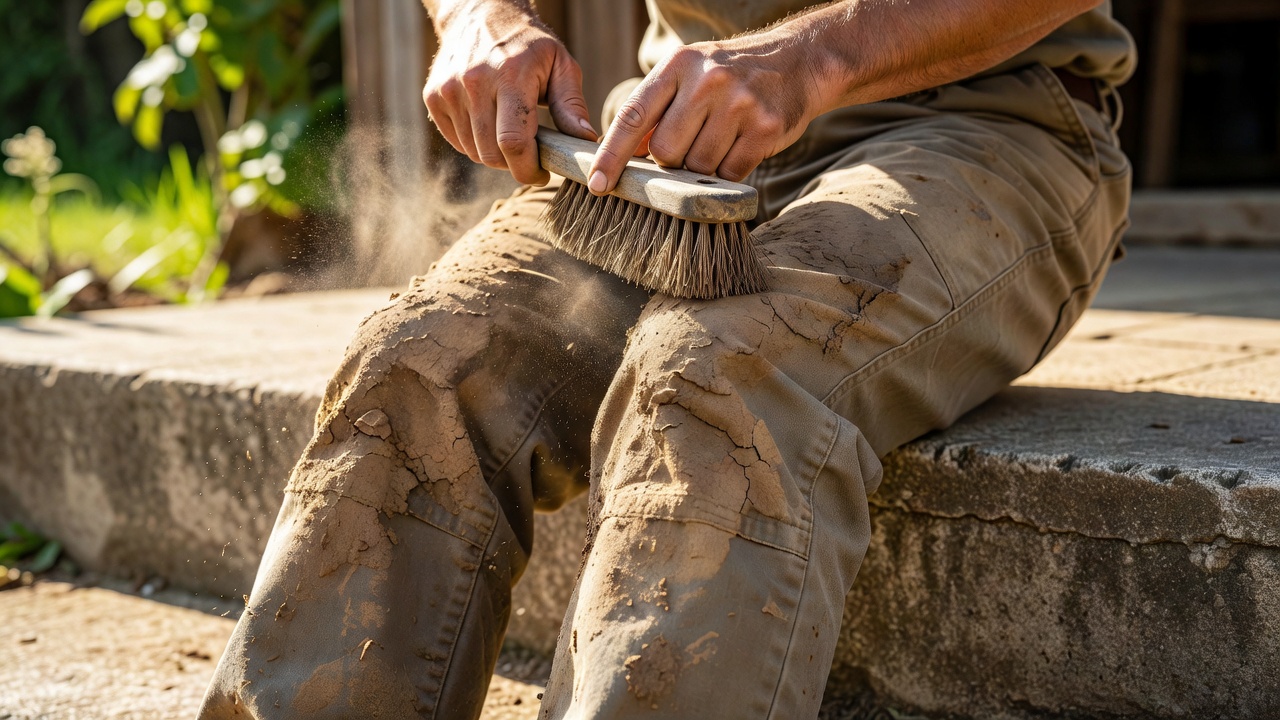
It is tempting to rinse mud straight off. On canvas, waxed cotton and heavy trousers, it is usually better to let it dry and then brush it away with a stiff clothes brush or an old nail brush. Wet scrubbing pushes fine silt deeper into the weave. A damp cloth handles whatever remains. For waxed jackets in particular, many makers advise cold water only and no detergent, because soap strips the wax.
Washing: less often, more gently
Most outdoor clothing needs washing less often than everyday cotton. Wool base layers can go several wears between washes if aired well. Fleece pills less when washed inside out on a cool, gentle cycle. Synthetic tees are the exception; they tend to hold odour and benefit from regular washing.
For waterproof shells, washing is part of the performance. Grime and skin oils reduce how well the outer fabric repels water. Use a mild, residue-free detergent or a technical wash, skip fabric softener, and rinse thoroughly. Then follow the label: some shells recommend a low tumble dry to help revive the water-repellent finish, others say line dry only.
Re-proofing: only when it stops working
If a clean shell no longer beads water and the face fabric darkens in rain, it may be time to re-treat it with a wash-in or spray-on repellent. Check the maker's guidance first, and try it on a small area if unsure. Re-proofing a jacket that only needed washing adds cost and residue without much benefit.
Waxed cotton needs its own routine: warm the wax gently, work it into seams and high-wear areas with a cloth, and leave the jacket somewhere warm to absorb it overnight. Most people find once a year enough for regular use, with spot re-waxing on shoulders and cuffs as needed.
Mend early
A small hole in a knitted jumper takes ten minutes to darn and saves the whole garment. A torn shell can often be patched with a repair tape designed for coated fabrics. Canvas and denim take sewn patches well, and visible mending has become a style of its own, celebrated by craft writers and repair cafés around the world. Many outdoor brands and independent tailors also offer repair services, and some community spaces host regular repair evenings.
Look out for the early signs: fraying at cuffs, seams lifting at the shoulders, zip teeth catching, elastic going slack at waistbands. Each is easier to fix before the next long walk than after it.
Storage between seasons
Store clothes clean and fully dry. Hang shells loosely rather than compressing them for months. Keep wool in breathable bags with cedar or lavender to discourage moths, and air it out on a sunny day now and then. Insulated jackets should hang or lie loose rather than staying in a stuff sack, so the fill keeps its loft.
Knowing when to retire a piece
Some wear is honest character: softened canvas, faded colour, a patched elbow. Other wear signals the end of a garment's working life on wet routes, such as a membrane peeling away inside a shell. A retired shell can still serve as a wind layer on dry days or a gardening jacket. When it is truly finished, look for textile recycling points rather than general waste.
Always check the care label and maker guidance first. Our notes describe common practice, not instructions for any specific garment.
Have a care question tied to your own route? Send it to us, or browse the trail FAQ.